
From the 30 Sensex firms, Mahindra & Mahindra, State Bank of India, Bharti Airtel, Hindustan Unilever, Kotak Mahindra Bank, UltraTech Cement, Adani Ports, and Tata Steel were the biggest gainers. ICICI Bank, IndusInd Bank, Asian Paints, Tech Mahindra, Infosys, HCL Technologies, Tata Consultancy Services, and Larsen & Toubro were among the laggards.
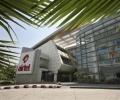
What worked for Airtel was that its data traffic growth was 13 per cent sequentially and its average data usage was even higher than Jio's at 11.9 gigabyte per month per user.

Among the 30 Sensex firms, Bajaj Finance, Infosys, Adani Ports, JSW Steel, HCL Tech, Bharti Airtel, IndusInd Bank and Tata Motors were the biggest laggards. ICICI Bank, Bajaj Finserv, Titan, Nestle and HDFC Bank were among the gainers.
From the Sensex basket, Power Grid, NTPC, JSW Steel, Asian Paints, ITC, Bharti Airtel, Hindustan Unilever and Tata Motors were the biggest gainers. On the other hand, Tata Consultancy Services, Kotak Mahindra Bank, Infosys, Wipro, Mahindra & Mahindra and HDFC Bank were among the laggards.
Adani Ports was the biggest loser in the Sensex pack, declining 1.37 per cent, followed by ITC, Bharti Airtel, NTPC, Maruti, Asian Paints, Sun Pharma, Power Grid, Hindustan Unilever and Larsen & Toubro. In contrast, Bajaj Finserv, Bajaj Finance, IndusInd Bank, Tata Steel, Axis Bank and Tech Mahindra were among the gainers.
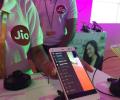
While Airtel's India wireless operational performance was one of its worst in recent times, Jio surprised the Street by reporting a higher expected operating and net profit.

Reacting to the statement Jio said that the admission by Ookla reinforces Jio's submission that there is a clear contamination in primary data collected by Ookla in India, where nearly 90 per cent of smartphones are dual SIM devices

Over the three-month period, Airtel's stock price has rallied from Rs 432 to Rs 540, while Vodafone Idea has risen from Rs 9.2 to Rs 11.8 per share.

Benchmark Sensex rose by nearly 91 points to close at a fresh lifetime high while Nifty settled above the 25,400 level for the first time supported by firm global trends ahead of the much-awaited US Fed's decision on interest rates. Extending its record-setting spree for the second day, the 30-share BSE Sensex climbed 90.88 points or 0.11 per cent to settle at a lifetime high of 83,079.66. During the day, it rose by 163.63 points or 0.19 per cent to 83,152.41.

Never before has an open and innovative platform like Airtel Zero been on offer that will help drive internet adoption through free usage (and companies and app developers being an equal partner in the process), says Srini Gopalan.
The sale proceeds will be fully utilised to repay debt at Bharti Telecom and will make the promoter holding firm a 'debt free company'.
The company has a valuation of Rs 2.22 trillion, up from Rs 1.33 trillion a year ago.

Telecom operators Bharti Airtel, Reliance Jio and Vodafone Idea on Tuesday submitted applications to participate in the Rs 3.92 lakh crore spectrum auction scheduled to start from March 1, according to official sources. This round of auction will be held for 2,251.25 Megahertz (MHz) in seven frequency bands -- 700 Mhz, 800 Mhz, 900 Mhz, 1800 Mhz 2100 Mhz, 2300 Mhz and 2500 Mhz -- at a cumulative base price of Rs 3.92 lakh crore. "Bharti Airtel, Reliance Jio and Vodafone Idea have submitted applications (for the spectrum auction)," an official source told PTI.

The stock exchange on which they are traded boasts higher profits than most of the companies whose shares are hitting new highs. Only 37 of approximately 2,000 listed companies with comparable data for 2022-23 (FY23) reported higher profits, while the rest had lower profits. Despite rising corporate profitability, the universe of companies that outperform the National Stock Exchange (NSE) in terms of profitability has been shrinking of late, according to an analysis of companies with comparable data over the past seven years.

From the 30 Sensex firms, NTPC, Nestle, Titan, Kotak Mahindra Bank, Maruti, Hindustan Unilever, Bharti Airtel and HDFC Bank were the biggest gainers. HCL Technologies, Tata Consultancy Services, Adani Ports, Larsen & Toubro, JSW Steel, State Bank of India, Tech Mahindra and Bajaj Finance were among the laggards from the pack.
The company has made payment in compliance with Telecom Department's instructions for self assessment, Mittal said, adding that the Supreme Court had not mentioned specific amounts.
Total wireless subscribers increased from 1.1 billion, in January to 1.2 billion in February, thereby registering a monthly growth rate of 0.72 per cent.

While Reliance Jio added 3.65 million users in May, both Bharti Airtel and Vodafone Idea continued to lose subscribers.

Benchmark equity indices Sensex and Nifty pared early gains to settle lower on Wednesday due to late selling in index major Reliance Industries, ITC and HDFC Bank even as the RBI took the first step towards a rate cut in its monetary policy review. Erasing its early gains, the 30-share BSE Sensex fell 167.71 points or 0.21 per cent to close at 81,467.1. During the day, it surged 684.4 points or 0.83 per cent to hit an intra-day high of 82,319.21.

Keeping surplus money in a bank account has become perilous, alerts Harsh Roongta.

From the 30 Sensex firms, Mahindra & Mahindra, JSW Steel, Maruti, Tata Steel, Larsen & Toubro, ICICI Bank, Power Grid, Nestle, Bharti Airtel and Adani Ports were the biggest gainers. Tata Consultancy Services emerged as the only laggard.

Bharti Airtel is rolling out last-mile connectivity with a target of reaching over 20 mn addressable households in 90-100 cities in the next 3 years

Bharti Airtel was the biggest gainer in the Sensex pack, rising 1.63 per cent, followed by Tata Steel, ICICI Bank, Titan, Asian Paints and Ultratech Cements. On the other hand, M&M, NTPC, Tata Motors, TCS and PowerGrid were the major losers.

After a year of decline, mergers and acquisitions (M&As) in India increased 13.8 per cent, reaching $69.2 billion in the first nine months of 2024, as against $60.8 billion during the same period in 2023. Led by Indian companies and private-equity (PE) firms, 2,301 transactions were signed between January and September this year as compared to 1,855 transactions reported in the same period last year, according to the Bloomberg data.

Billionaire Gautam Adani's group is said to be planning a surprise entry into the race to acquire telecom spectrum, which will pitch it directly against Mukesh Ambani's Reliance Jio and telecom czar Sunil Bharti Mittal's Airtel, sources said. Applications for participating in the July 26 auction of airwaves, including those capable of providing fifth-generation or 5G telecom services such as ultra-high-speed internet connectivity, closed on Friday with at least four applications. Jio, Airtel and Vodafone Idea -- the three private players in the telecom sector -- applied, three sources with knowledge of the matter said.

'Advertising this season will help IPL surpass $550 million in ad revenues, across digital and pay TV.' 'It should still represent a steep loss against annualised 2023-2027 IPL rights fees of $1.2 billion.'

Among the 30 Sensex firms, Bajaj Finserv, IndusInd Bank, Tech Mahindra, Bajaj Finance, Kotak Mahindra Bank, Axis Bank, NTPC, and Sun Pharma were the major gainers. On the other hand, Bharti Airtel, ITC, Adani Ports, JSW Steel and Tata Motors were among the laggards.

"Starting today (on Wednesday), Airtel Xstream Fibre is available to homes, SOHO (Small Office Home Office) and small commercial establishments in Delhi, Gurgaon, Faridabad, Noida, Ghaziabad, Mumbai, Pune, Bangalore, Hyderabad, Chennai, Chandigarh, Kolkata, Indore, Jaipur and Ahmedabad," Bharti Airtel said in a statement.

Among the 30 Sensex firms, Bajaj Finserv, Bajaj Finance, HCL Tech, IndusInd Bank, ITC, UltraTech Cement, Axis Bank and Infosys were the biggest gainers. On the other hand, Tata Motors, NTPC, Mahindra & Mahindra, Bharti Airtel, Larsen & Toubro and Power Grid were among the laggards.

Bharti's ratings headroom is likely to improve with an equity infusion, planned asset sales and growing EBITDA from Africa.

Payments banks are expecting to get the rights to offer small-ticket loans sometime soon, according to an industry source familiar with the matter. The industry has been in talks with the Reserve Bank of India (RBI) for some time in seeking lending rights.

Apple's iPhone, the touch screen handset that acquired a cult status in the United States and other Western countries, will be available to Indian mobile users through private telecom operators Bharti Airtel and Vodafone Essar from August 22, giving competitors like Nokia, Samsung and others a run for their money.

While Bajaj Finance, Asian Paints, Tata Steel, NTPC and SBI were among the other gainers, ONGC, Axis Bank, Tech Mahindra, Infosys and ICICI Bank were among the laggards. NSE Nifty advanced 82.75 points or 0.73 per cent to settle at 11,470.25.

Bharti Airtel was the biggest gainer, rising by over 4.51 per cent. Adani Ports, Sun Pharma, Tata Steel, HCL Technologies, Infosys, JSW Steel and Mahindra & Mahindra were the other big gainers.
Among the 30 Sensex firms, Mahindra & Mahindra, IndusInd Bank, Bharti Airtel, Axis Bank, Tata Motors and ICICI Bank were the biggest laggards. In contrast, Tata Steel, Tata Consultancy Services, NTPC, JSW Steel, Asian Paints and Reliance Industries were gainers.
Airtel, Vodafone-Idea and other telecom operators may have to pay the government a whopping Rs 1.42 lakh crore following the Supreme Court order last week that sent shock waves through an industry already grappling with billions of dollars in debt and an intense tariff war to retain customers.

Among the 30 Sensex firms, Adani Ports and Power Grid climbed over 3 per cent each. Tata Steel, JSW Steel, Infosys, Mahindra & Mahindra, Maruti, and Larsen & Toubro were the other big gainers. IndusInd Bank, Bharti Airtel, Hindustan Unilever, Tech Mahindra and Titan were the laggards.
The board of Bharti Airtel approved the rights issue to raise up to Rs 25,000 crore through the issuance of fully paid up shares at a price of Rs 220 per share and to raise an additional Rs 7,000 crore via the foreign currency perpetual bond issue.
Among the Sensex firms, Titan, Asian Paints, ITC, Hindustan Unilever, Nestle India, Bajaj Finserv and Bharti Airtel were among the gainers. In contrast, UltraTech Cement, Tech Mahindra, Tata Steel, Power Grid, HDFC Bank, HCL Technology, State Bank of India and ICICI Bank were the laggards.

In August 2021, Nick Read, chief executive of Vodafone Plc at the time, did not mince his words while speaking about the India business in an earnings call. Replying to an analyst's question on Vodafone Idea, a venture with the Aditya Birla Group that had piled on huge debts and worrisome losses, Read described it as a highly stressed situation that "they (Vodafone Idea) are trying to navigate... "We, as a group, try to provide them as much practical support as we can, but I want to make it very clear, we are not putting any additional equity into India.''
